The Apocalypse – Linkhorn Biosphere Log for Oct 7th, 2025
Linkhorn Biosphere Log for October 7th, 2025: The Apocalypse
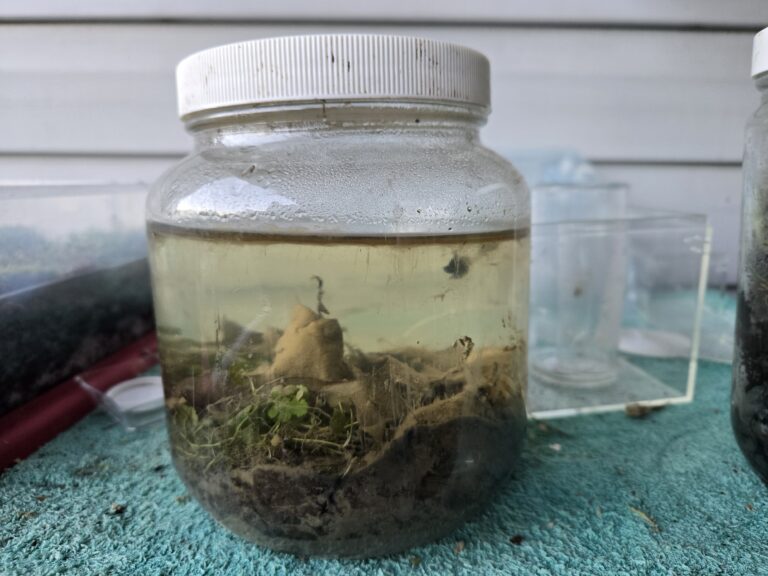
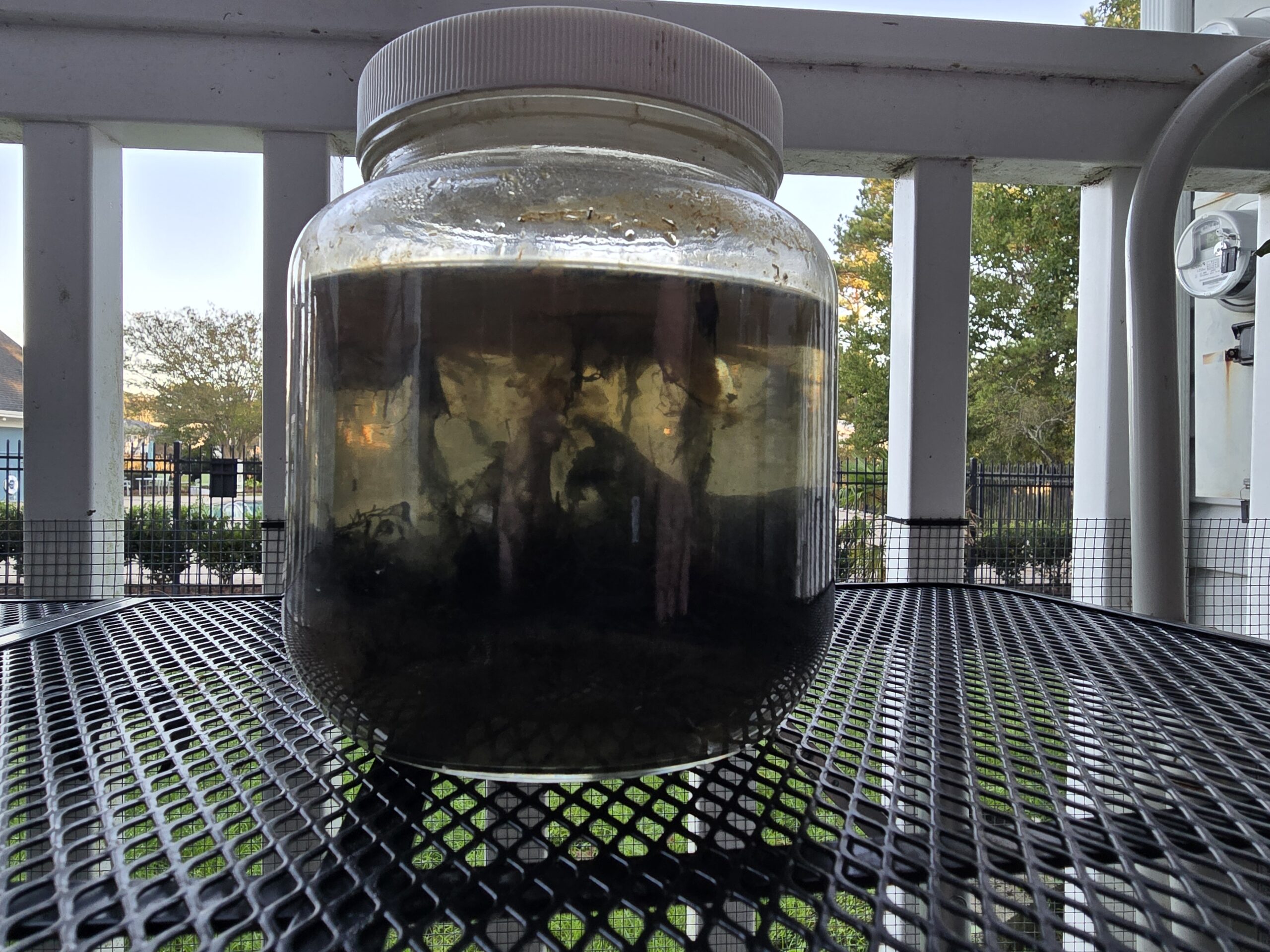 Well, it seems that the Linkhorn is dying—it’s turning black. There are probably several reasons: not enough oxygen, not enough light, and who knows what else, but it’s definitely declining. As noted in other entries, I did observe some micro-life in there, so it’s not totally dead. My plan now is to simply let the jar die and then see what comes back from it. Let’s see what re-emerges from the Linkhorn biosphere apocalypse of 2025—stay tuned to see how this goes.
By the way, the morning water temperature is around 68 degrees, and I ordered a test kit; I’ll add those results to the log today to see what the water looks like. For now, I’m going to let it die and see if it comes back to life.
Linkhorn Biosphere Water Test Results for October 7th, 2025
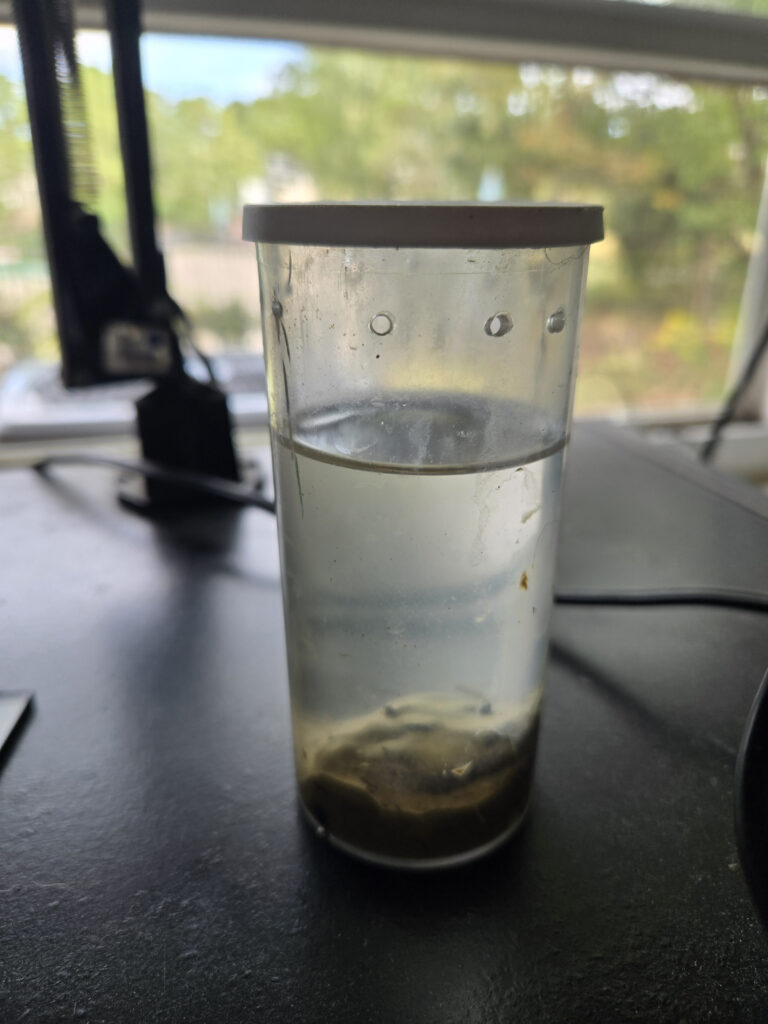
Not so dead? Well, the water seems pretty much fine for what it is. There aren’t really many plants in there, but I don’t know, it seems to be clearing again! Like I said earlier, here are the water test results. I’m not too worried about it, but it’s fun to do, and I’m going to just watch what happens over time. It’s still early. I have to remind myself: it’s still early! Bye!—–
Here’s an analysis of the water test results:
- High Hardness Level: The water sample shows a significantly high hardness level of 425 ppm. This could indicate a high concentration of dissolved minerals like calcium and magnesium, which can lead to issues such as scale buildup
- Moderate Total Alkalinity: The total alkalinity is 130 ppm. This level is generally considered moderate and contributes to the water’s buffering capacity, helping to stabilize pH.
- Neutral pH: The pH level is 7.8, which is close to neutral. This indicates that the water is neither overly acidic nor overly alkaline, which is generally desirable for most aquatic life and human consumption.
- Absence of Key Contaminants:
- Free Chlorine: The Free Chlorine level is 0 ppm, suggesting that there is no residual disinfectant in the water, which is good for consumption but might indicate a lack of recent disinfection.
- Nitrite: The Nitrite level is 0 ppm, which is a positive indicator as nitrites can be harmful to aquatic life.
- Sodium Chloride: The Sodium Chloride level is 0 ppm, which is ideal as high levels can affect taste and be detrimental to certain plants and animals.
- Ammonia Nitrogen: The Ammonia Nitrogen level is 0 ppm, which is important as ammonia can be toxic to aquatic organisms.
- Low Nitrate Level: The Nitrate level is 10 ppm. While not zero, this level is relatively low and generally considered safe for drinking water.
In summary, the water sample for October 7, 2025, appears to be free of several key contaminants like chlorine, nitrite, sodium chloride, and ammonia nitrogen, with a neutral pH. However, the high hardness level is a notable characteristic that might warrant further investigation or treatment depending on the intended use of the water.